

Unsinkable Titanic Story: Facts and Real History
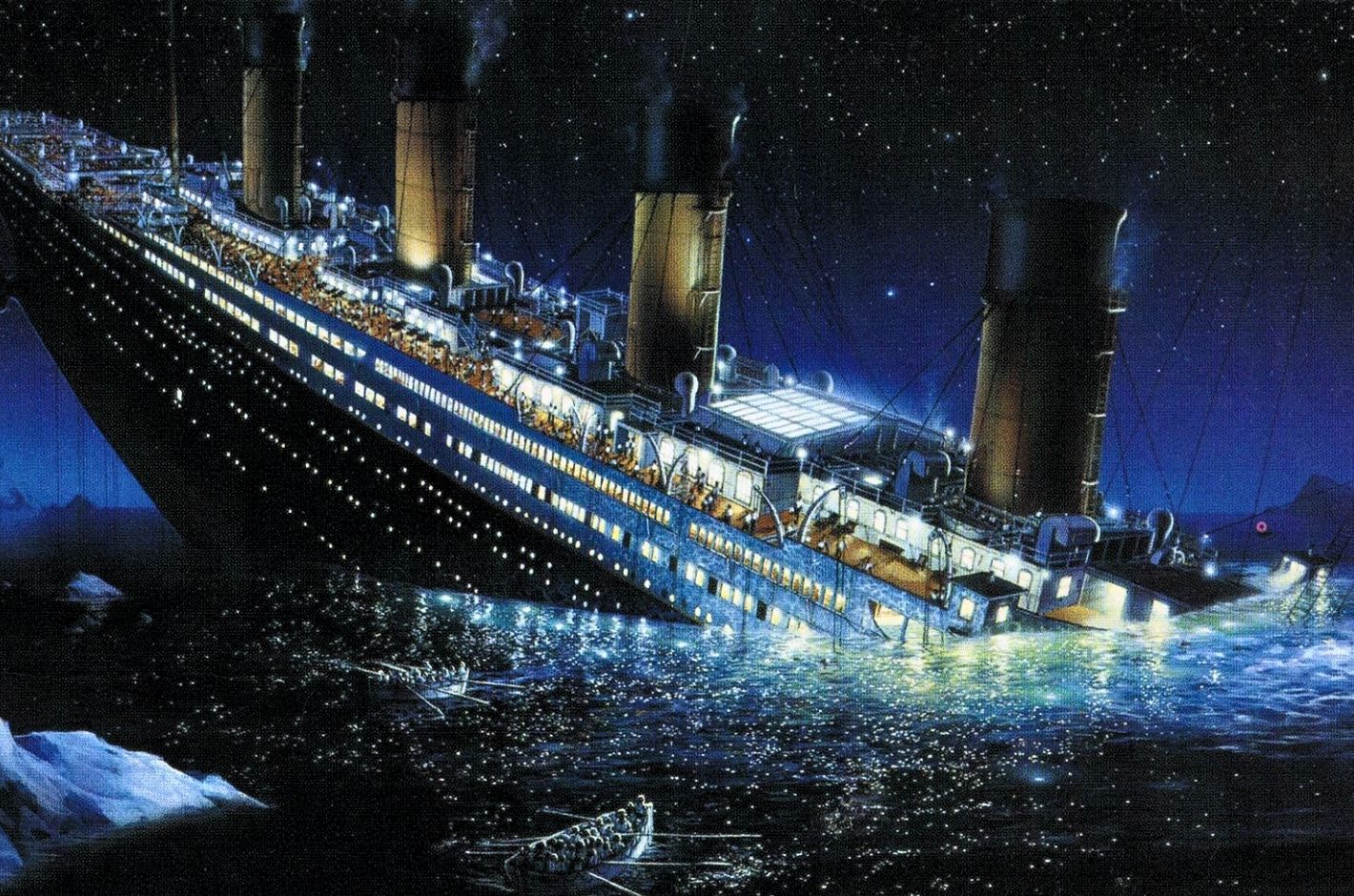
More than a hundred years have passed since the RMS Titanic sank in the icy waters of the North Atlantic Ocean, but the story of this so-called unsinkable ship still fascinates people across the world. It was one of the greatest human-made creations of its time — but it also became a symbol of overconfidence and loss.
Built at a staggering cost of around 1.5 million British pounds in 1912, equivalent to more than 200 million US dollars today, the Titanic represented luxury, innovation, and human ambition at its peak.
This article covers the real history of the Titanic, its journey, the reasons behind its tragic sinking, and some rare facts that many people don’t know.
How the Titanic Was Built
The Titanic was built by the British company White Star Line to compete with other luxury ships of that era. Construction started in 1909 at the Harland and Wolff shipyard in Belfast, Ireland, and took nearly three years to complete.
The ship was 882 feet long and 92 feet wide, weighing about 46,000 tons. It had nine decks and could carry more than 3,300 people, including passengers and crew. The ship used the latest technology available at that time, including a powerful Marconi wireless system for communication and watertight compartments to prevent flooding.
But there was a major mistake — the watertight compartments did not extend high enough. Once water entered several of them, it spilled over like a domino effect, leading to disaster.
Inside the Titanic: A Floating Palace
The Titanic was designed for luxury. It had a gymnasium, swimming pool, squash court, Turkish bath, and even an onboard newspaper called “Atlantic Daily Bulletin.” The first-class dining room could seat more than 500 people and featured fine china and silver cutlery.
First-class passengers lived like royalty, while second and third-class passengers had simpler rooms but still better conditions than most ships of that time. A third-class ticket cost around 7 pounds, while a first-class suite could cost up to 870 pounds — equal to several lakhs in today’s value.
The Maiden Voyage
The Titanic began its first and only voyage on 10 April 1912 from Southampton, England, heading toward New York City. It carried around 2,224 people, including crew members.
After stopping briefly at Cherbourg in France and Queenstown (now Cobh) in Ireland, it sailed into the Atlantic Ocean. The journey was smooth, and passengers enjoyed concerts, grand dinners, and the ship’s modern facilities.
However, the ship’s crew had already received several iceberg warnings from other ships in the area, which were mostly ignored or not taken seriously.
The Night of the Tragedy
On the night of 14 April 1912, the sea was calm, and there was no moonlight — making it almost impossible to spot icebergs. At 11:40 pm, the lookout Frederick Fleet saw an iceberg directly ahead. Despite efforts to turn, the ship scraped against the iceberg, tearing open six of its compartments.
Titanic could only survive with four compartments flooded. Within hours, it became clear the ship would sink.
The crew began lowering lifeboats, but there were only 20 in total — enough for just half the passengers. Many boats were launched half-empty due to confusion and disbelief.
At 2:20 am on 15 April 1912, the Titanic broke apart and sank completely. More than 1,500 people died, and only 706 survived.
Rare and Lesser-Known Facts About the Titanic
-
The Titanic’s fourth funnel was only for decoration to make the ship look larger and more powerful.
-
Lookouts had no binoculars because the key was left with an officer who missed the voyage.
-
Iceberg warning messages were delayed as radio operators focused on passenger telegrams.
-
The nearby ship SS Californian saw distress rockets but didn’t respond due to miscommunication.
-
The sea temperature was around -2°C; most passengers died from hypothermia, not drowning.
-
The ship’s cat Jenny left before departure in Southampton — later seen as a bad omen.
-
Violet Jessop, a crew member, survived both the Titanic and Britannic sinkings.
-
Only three of the four funnels were functional; the fourth was just for appearance.
-
The iceberg likely came from Greenland and was estimated to be about 1,000 years old.
After the Sinking
The rescue ship Carpathia reached the scene around 4 am and saved 706 people from lifeboats. The tragedy shocked the entire world and led to major changes in sea travel laws.
In 1914, new rules were introduced under the International Convention for the Safety of Life at Sea (SOLAS). Every ship was required to have enough lifeboats for all passengers, maintain a 24-hour radio watch, and hold regular safety drills.
Discovery of the Wreck
For more than 70 years, no one knew exactly where the Titanic sank. In 1985, ocean explorer Robert Ballard and his team found the wreck at a depth of around 12,500 feet. They discovered that the ship had broken into two large pieces lying 600 meters apart on the seabed.
The discovery helped scientists understand how the ship broke apart and led to new deep-sea exploration technologies. However, many experts believe the site should remain untouched as a memorial, not a tourist spot.
Titanic in Popular Culture
In 1997, James Cameron’s film “Titanic” retold the story with the characters Jack and Rose. It became one of the highest-grossing films in history and introduced the tragedy to younger generations.
Even today, museums, documentaries, and virtual tours around the world keep the memory of the Titanic alive.
Conclusion
The Titanic was more than just a ship — it was a dream, a symbol of progress, and a warning about human pride. The tragedy reminds us that technology has limits, and nature cannot always be controlled.
Every year, people still remember the night of 14 April 1912, not just for the loss, but for the courage, sacrifice, and lessons it taught the world. The Titanic may rest deep under the sea, but its story continues to live forever.

Vikas
September 2, 2025 at 6:59 pmThe best blog
Vikas
September 2, 2025 at 6:59 pmexactly